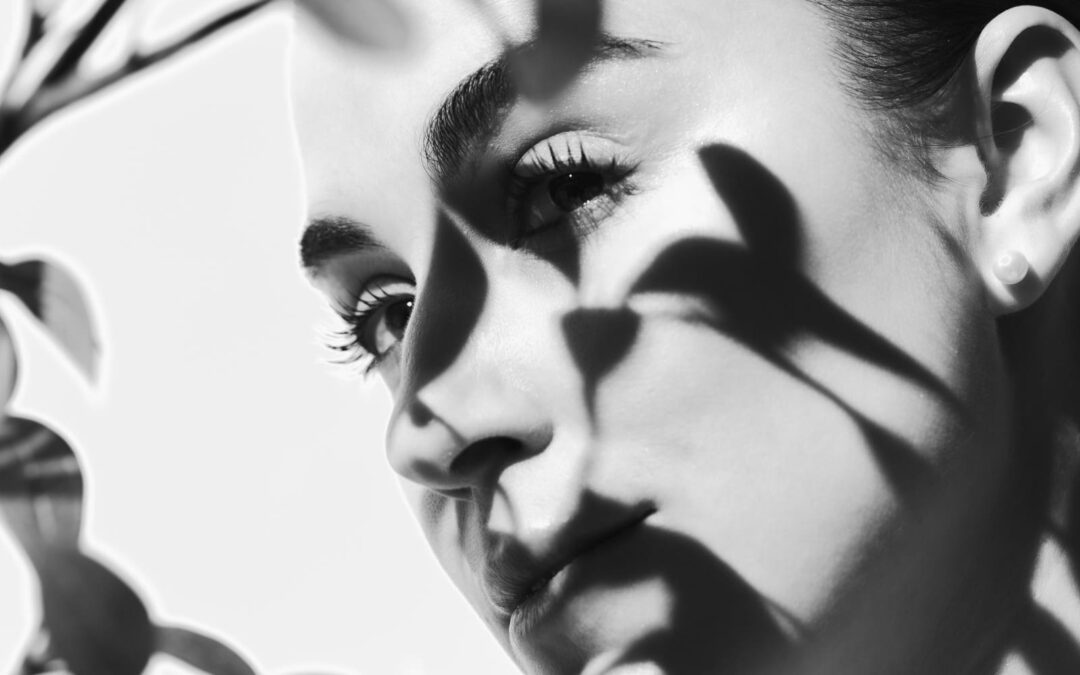
We can see somebody’s life from the outside and still not know what it feels like to live it.
A kaleidoscope is designed to be viewed by one person at a time. You hold it to your eye and see the unique pattern it has created: the shapes and colours falling together. It has familiar pieces and no single correct arrangement. Every turn creates a new one. Someone else can watch you turn it and imagine what you’re seeing, but the view belongs to one person at a time.
You can see the same thing happening in our lives.
From the outside, we can know a surprising amount about somebody else’s life. We know whether someone is married or single, if they have children, what they do for work and where they live. We know when people buy a house, get divorced, change careers or retire. These things give us the shape of a life. They don’t tell us how it feels to live inside it.
I’ve interviewed numerous single people about living alone, including the feeling of coming home and closing the door on an empty flat. For one person, that moment might offer relief: they’re finally alone, in their own space, with nobody needing anything from them. For another, it can be the loneliest moment of the day. And a person can feel both at different points in their life, or even on different evenings. The fact they live alone hasn’t changed. What has is the experience of living it.
I’ve spent my career as a qualitative researcher and one of the things I’ve seen change most over time is how we segment people. We used to rely heavily on life stage: young and single, pre-family, young family, empty nester. When people’s lives were more likely to follow a shared sequence, life stage could be a useful proxy for what somebody might need and why.
Over time, segmentation shifted towards understanding needstates. People at very different life stages can be looking for similar things, while people who look almost identical on paper can want something completely different. Their demographic profile or life stage is still useful information. It just doesn’t tell you what’s really going on, what they’re feeling or what they’re looking for.
Brands increasingly look at people this way. We don’t yet apply it to how we perceive one another in our everyday lives. We still default to life stages.
Let’s take parenthood, a part of life that we attach a lot of assumed feelings to. Being a parent is often described as one of life’s great sources of happiness. For many people it can be, but research across 86 countries found a much more complicated picture. Having more children was associated with lower happiness among younger adults. In their thirties that relationship disappeared, and from 40 onwards it became positive.
There’s a range of emotions you can feel as a parent. You can love your children and find the daily experience of parenting exhausting. You can find purpose in it and miss parts of the life you had before. And how it feels isn’t fixed. Children grow up, your circumstances change and you do too.
Being single is just as complex.
Researchers in Germany followed nearly 3,000 never-married single people for eleven years. Most had consistently high overall life satisfaction, yet there was much more variation in how satisfied they were with being single and whether they wanted a partner. Two people can both be single, never married and the same age. One is living exactly as they want. The other hopes that part of their life will change.
This is the kind of difference that life stage can’t capture. It’s also what qualitative research is good at getting underneath. You can know the facts of somebody’s life and then ask what those facts actually mean to them. What does it feel like? What has changed?
I’ve recently been asking people to think about their life as a kaleidoscope and describe the pattern to me: the pieces and the colours. What surprised me was how differently people approached it. Some started with the outside, with the key moments in their life, and then talked about the impact those moments had on them. Others went straight to how their life felt: joy, curiosity, laughter.
“That was when I was happiest.” “I finally felt safe.” “I stopped feeling like myself.”
What struck me was how instinctively people connected colour with emotion. It turns out we do this remarkably consistently. A study of nearly 4,600 people across 30 countries found strong similarities in the emotions people associated with different colours, even across different languages and cultures.
It made me think about the colours in a kaleidoscope differently. If the pieces are the things that make up a life, the colours are how they feel to live them.
Someone’s life can look almost unchanged from the outside for fifteen years. Same marriage, house, career and children. The pieces remain roughly the same size and shape, yet the experience of living them can change completely.
The piece doesn’t have to move for its colour to change.
A career can move from being exciting to feeling like a chore. Being single can feel liberating and lonely, sometimes at the same time. A piece doesn’t have to be one colour. Multiple feelings can live together inside. From the outside, we might imagine just one.
A life doesn’t have to be unusual for there to be a gap between what people see and what the person living it experiences. The shape can look familiar and still feel different from what we assume.
We can see the shape of somebody’s life. We can see the pieces grow, disappear and move. What we can’t see is their colour and how it changes.
This article is the fourth in a series exploring Kaleidoscope Lives: a framework for thinking about modern adulthood. I’ll be exploring what happens when adulthood stops following one recognisable sequence and why we need better language for the lives that emerge instead.